
In Japan, You Don’t Smell Incense — You Listen
There is a Japanese phrase, monkō, that translates literally as “listening to incense.”
It isn’t a poetic flourish. In kōdō — the way of incense — you don’t smell a fragrance, you listen to what it has to tell you. Smelling is something that happens to you. Listening is something you do, with attention.
Kōdō is counted as one of Japan’s three classical arts of refinement, alongside chadō, the way of tea, and kadō, the way of flowers. The other two are well known outside Japan. Incense is the one that never travelled.
It began as a Buddhist offering, but during the Muromachi period rare fragrant woods started arriving at the imperial court as gifts, and incense moved out of the temple and into courtly life as a pursuit in its own right. Its formal codification is generally credited to Sanjōnishi Sanetaka, a court noble of the fifteenth and sixteenth centuries.
The practice is more restrained than most people expect. A sliver of fragrant wood — often aloeswood, sometimes kyara, the rarest grade — is cut into a square a few millimetres across and set on a small sheet of mica above heated ash. The wood never burns. It’s warmed until it releases its scent, and the cup is passed from hand to hand, each person raising it and taking three quiet breaths.
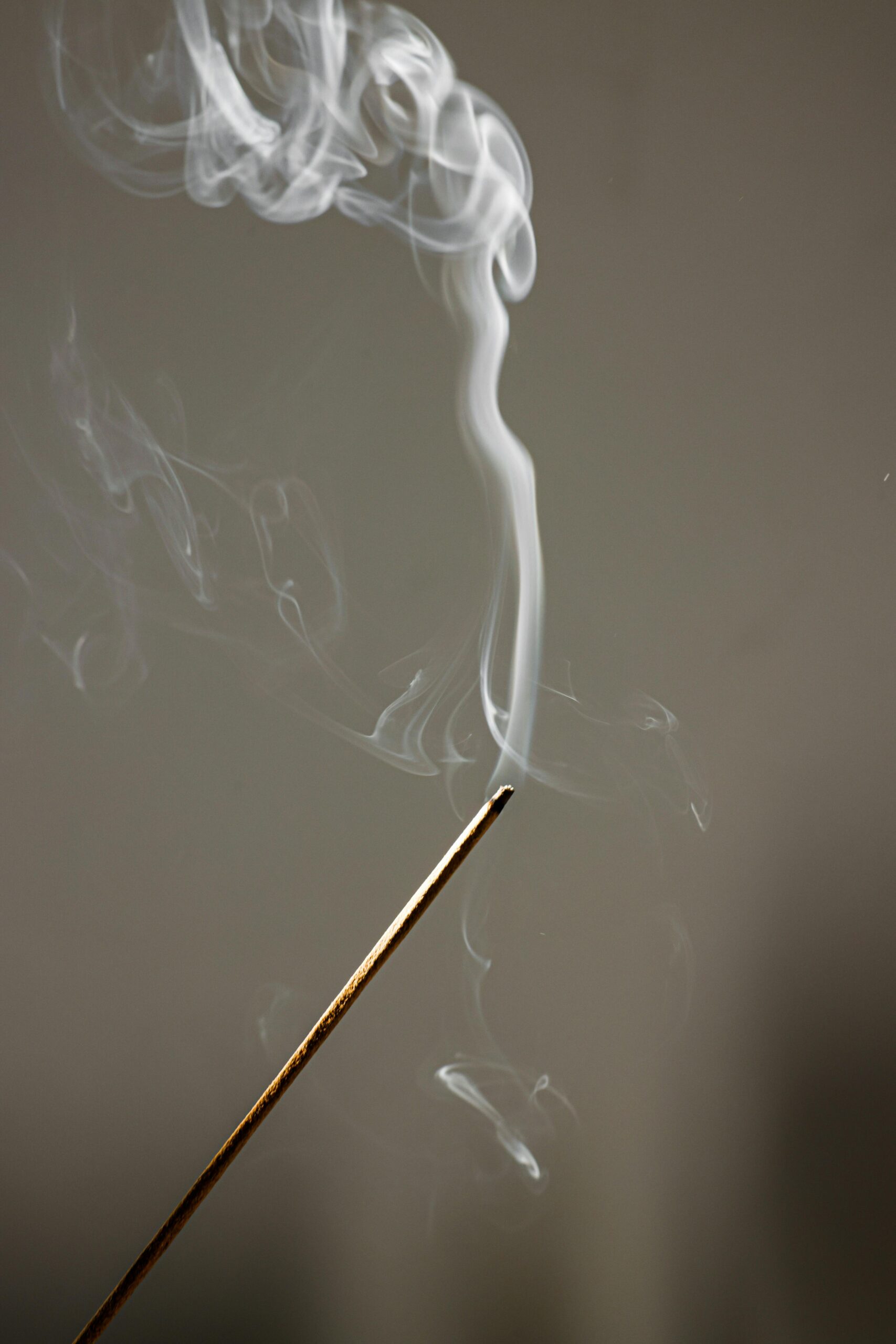
You can borrow the essence of this without any of the apparatus. Light one good stick, put your phone in another room, and give it your attention for the length of the burn. Notice where the scent changes as it goes. That, stripped of six centuries of ceremony, is the whole idea.
Worth knowing: kōdō has a game. In genjikō, five incenses are warmed in turn and passed around, and you must work out which were the same and which were different — without ever being told. Your answer is recorded not in words but as a diagram: five vertical strokes, with those you judged identical joined across the top by a horizontal bar. There are exactly fifty-two possible patterns, each named after a chapter of The Tale of Genji. The symbols became so admired as pure design that they escaped the game entirely — you’ll still find them on kimono, ceramics and family crests today, six hundred years after they were invented to score a parlour amusement among nobles.
Click an image below to explore our aloeswood and sandalwood incense.