The Quiet Weight of Wood and Brass
Some objects earn their place on a shelf simply by doing one thing well. This is one of them.
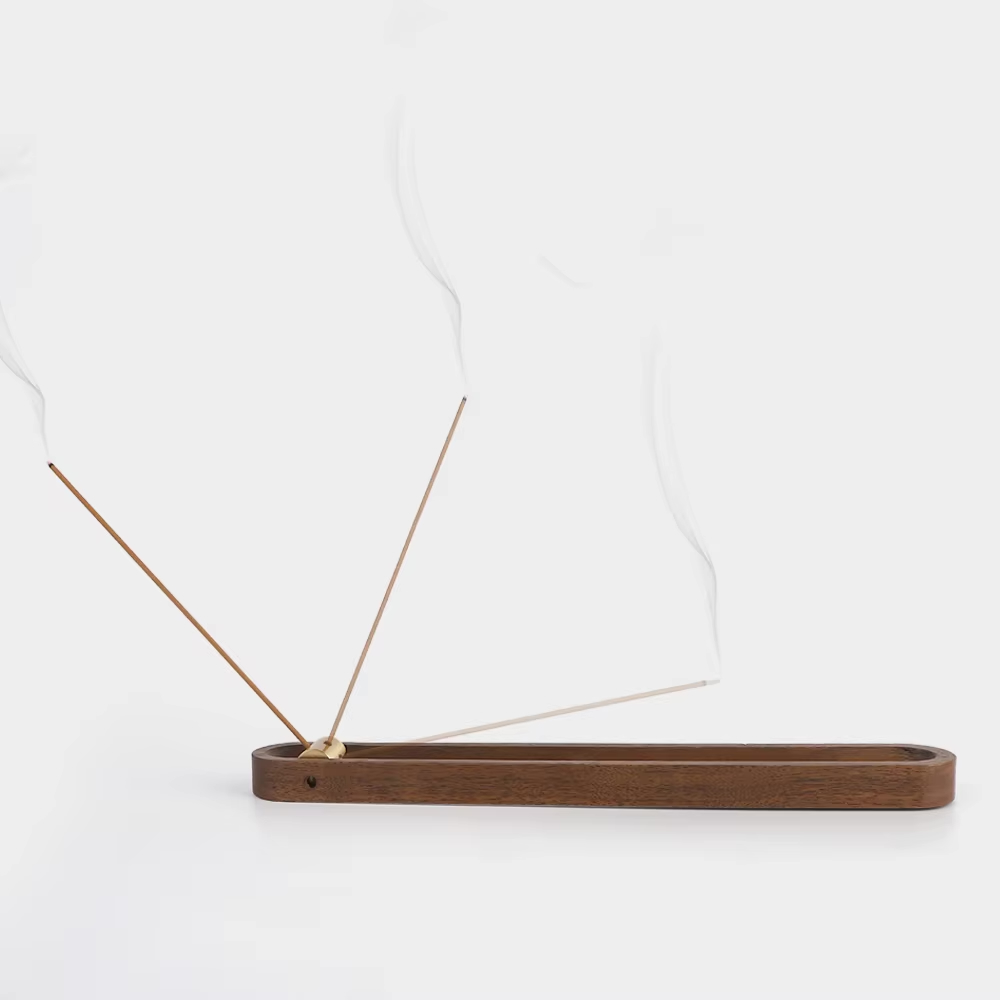
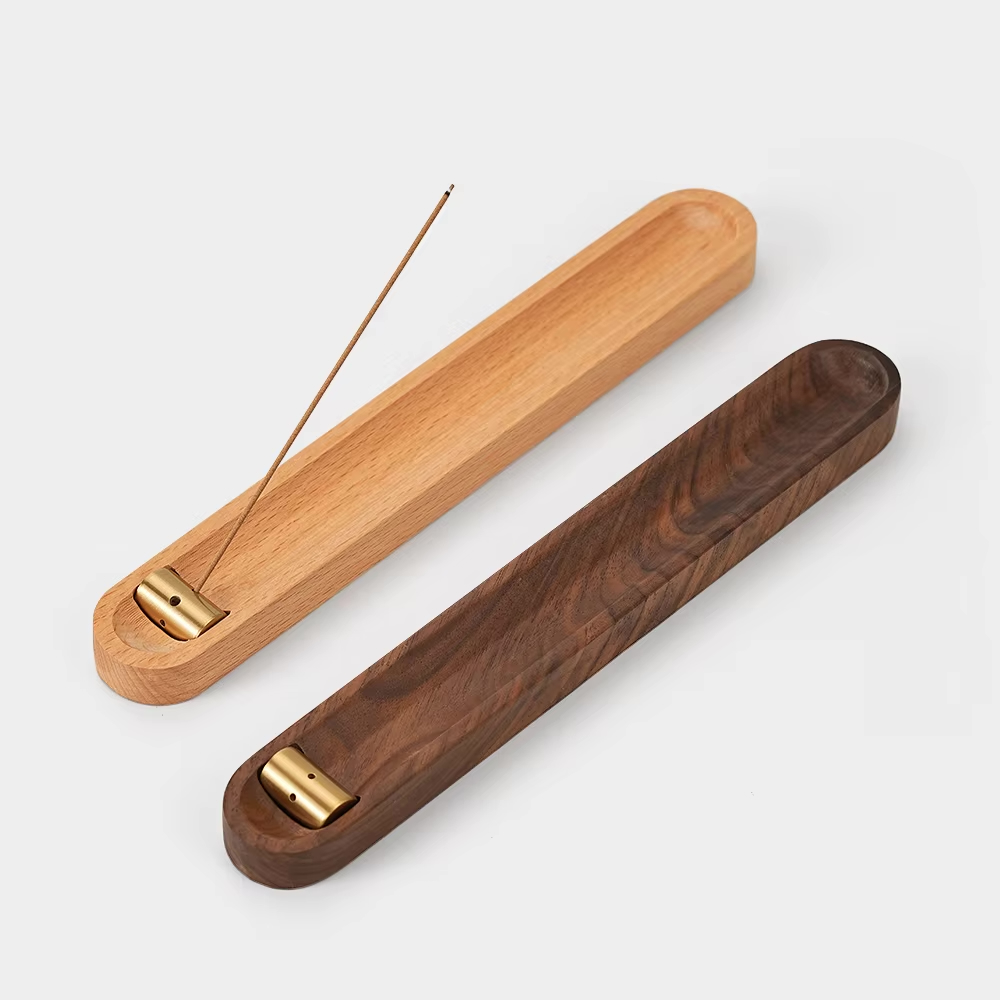
At its heart, it’s a long, low tray — walnut or beech, carved with a gentle channel down its length, fitted with a solid brass insert at one end. Nothing about it asks for attention. That’s rather the point. It’s designed to sit quietly on a console, a bedside table, a shelf by a window, and to be picked up without ceremony each time it’s needed.
The brass insert carries three precision holes, sized to hold a stick securely no matter how thin the stem. Beneath it, the carved channel does the unglamorous work of catching ash as it falls — so the ritual stays a ritual, not a small daily cleanup. It’s a detail that only reveals itself in use: you notice it the first time ash lands exactly where it should, rather than on the table.
The wood itself is left to speak for itself. Walnut runs dark and richly grained; beech, paler and finer. Each piece is hand-finished, and because the material is real wood rather than a uniform composite, no two holders share quite the same pattern — small variations in tone that are part of the object, not a flaw in it.
Used daily, it asks very little: a wipe with a dry cloth, and a bit of patience if the brass begins to change colour with age.
Worth knowing: that colour change isn’t the brass wearing out — it’s patina, the same slow tarnish-and-soften process that’s long been part of how brass tools and fittings are kept in Japanese incense practice. Many are left to darken naturally rather than polished bright; a few years in, the holder looks less like something bought and more like something used.
Click an image below to explore the walnut and beech incense holders.